SEVERNSIDE BIRDS
page views
SITE DETAILS
MAPS
O.S Landranger 172 Bristol and Bath
O.S Pathfinder ST48/58 Mid Severn Estuary
Click here for link to
googlemap
INTRODUCTION
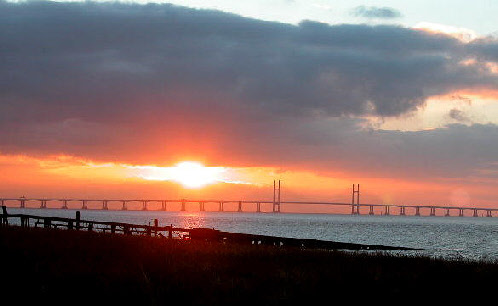
The area covered is a 10 kilometre coastal strip from the Aust Cliff/Service station, south to the southern end of Chittening Warth. including pools at and near Avonmouth Sewage Works. The eastern boundary is formed mainly by the A403 with a few bulges to the East, Aust to Avonmouth coast road. The “patch” is centred on the village of Severn Beach and dominated by the structure of the Second Severn Crossing.
The total number of species seen on Severnside is 288 with 190 recorded in the most prolific year (2024). Like any well watched site, anything can and does turn up. Visits at the right time of year with favourable weather conditions can produce some excellent birds.
Although this is not the most scenic stretch of coast, the area is of great importance to migrant and wintering birds.
The southern end is Chittening Warth, an area of mud flats and salt marsh. The salt marsh has no public access but can be viewed in places from the Severn Way footpath by heading south from Severn Beach to New Pill near the only pedestrian railway crossing. Just across the coast road is the Sea bank gas power station. A new section of the national cycle way runs past the entrance. Here there are three very small pools and areas of Hawthorn that attract spring and autumn migrants,
The mid point of the patch is the village of Severn Beach and the Second Severn Crossing. The habitat at Severn Beach consists of coastal scrub opposite the Seabank Power station and Energy Recovery centre, joining a small area of salt marsh. The tall concrete sea defences then extend north to the Prince of Wales bridge. The rocky, “Shaft beach” 100 metres south of the bridge is now the main wader roost site at Severn Beach.
There are some small pools, the “Orchard pools”, inland from the village, just to the east of the A403 (grid reference ST 543838). One of these pools is easily viewed from the lane here.
The northern section runs from the Prince of Wales bridge to New Passage, Northwick Warth, Aust Warth then Aust Cliff and services.
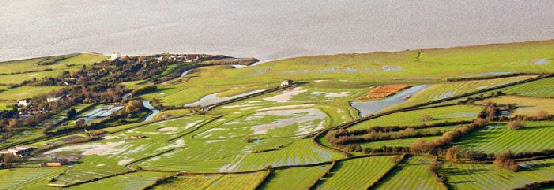
As of 2022, an area of Aust Wetland has been created to the East of the coast road near Aust warth. It is accessed by public footpath (on Common Lane ) opposite the Boar’s Head pub in Aust Village. Time will tell if this produces any thing of interest if and when it contains any water.
New Passage bulges into the estuary. The tidal creek here is attractive to gulls and duck. Here the large garden of “the Glen”, with its pine trees, can be attractive to migrants and is easily viewed from the public footpath.
The salt marsh and rough grazing of Northwick Warth extend all the way north to Aust. Brackish pools and “The Flash” may be present depending on the height of recent tides. These can hold some good waders.
The old military firing range and sheep fields at Northwick Warth were “ landscaped” in late summer of 2011 to create the
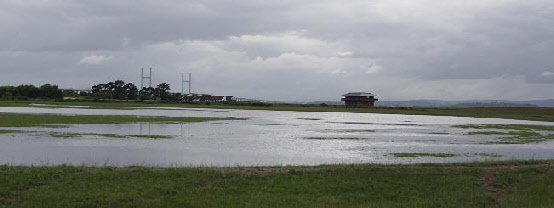
Pilning Wetland
, areas of fresh water flooding to improve the area for winter waterfowl and hopefully some breeding waders. This new habitat has quickly become the the main attraction for visiting birds and birdwatchers producing excellent rarities such as Red-
necked Phalarope, Grey Phalaropes, Black-
winged Stilts, Pectoral Sandpipers, Lesser Yellowlegs, White-
rumped Sandpiper, Temminck’s Stints, Collared Pratincole, Glossy Ibis, Spoonbills, Cattle Egrets, Great White Egrets, Hooded Merganser, Black-
necked Grebe, Slavonian Grebe, Red-
throated Pipit and Citrine Wagtails. The pools can be seen well from the Severn Way and excellent views of the wader scrape are obtained from the footpath that heads inland just after the last pool.
Pilning Wetland
, 23.11.12 © John Luke
Pilning Wetland wader scrape
,
16.6.13
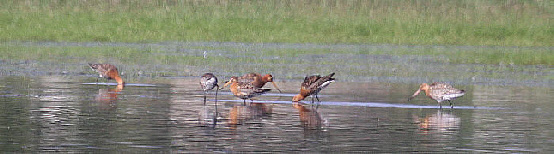
Black-
tailed Godwits
, Pilning Wetland 5.7.13
Aust Warth is now a regular site for wintering Short-
eared Owls and has recently attracted a Long-
eared Owl and Barn Owls.
The fields and Service Station area of Aust Cliff are very good in spring and autumn migration, being on both the highest point (35 Metres) and narrow part of the estuary. This section of the Severnside patch has amassed a list of over 157 species so far. There are some good areas of hedge and a small wood. Scarcities have included Eastern Yellow Wagtail, Yellow-
browed Warblers, Alpine Swift, Pallid Swift, Wrynecks, Firecrest, Woodlarks, Ring Ouzels, Woodlarks, Ortolan Bunting, flyover White-
tailed Eagle, Cranes, Great White Egrets,White Stork and more.
There is a public footpath (The Severn Way) that runs the entire length of the site as well as minor roads from the A403 into Severn Beach, New Passage and Aust. Other footpaths and bridle ways criss-
cross the area and adjacent farmland.
Access
Parking is free on public roads at Severn Beach, New Passage and Aust Warth but please note there is a strict 2 hour limit for free parking at Aust Services.
Public toilets are also found near the shops in Severn Beach and at Aust Motorway services.
Visit the links page for local tide times (Avonmouth plus approx. 10 mins.), weather and wind predictions.
If you visit any of the sites mentioned, enjoy the birds.
If you need further information or are fortunate enough to find a rare or interesting sighting, please message on Bluesky
@severnsidebirds.bsky.social
or e-
mail me, Paul Bowerman, at:
killdeer50@rocketmail.com
Sunset from Aust Warth towards the Prince of Wales bridge